Today’s windshields are no longer just clear barriers to the wind—they’re critical parts of your vehicle’s Advanced Driver Assistance Systems (ADAS). Lane-keeping cameras sit behind the glass, forward collision sensors “look” through it, and some vehicles even project a head-up display across it. When that glass is replaced, those systems can’t be trusted until they’re verified and, if needed, recalibrated. Calibration is how technicians prove the cameras and sensors are aimed precisely where the vehicle thinks they are aimed. Skipping that step risks false warnings, missed lane lines, and increased stopping distances. For Phoenix drivers who rack up freeway miles under bright sun and high glare, getting ADAS right after a windshield job isn’t a “nice to have”—it’s essential.
Why a New Windshield Changes What Cameras See
Even if your replacement windshield looks identical, tiny differences matter to a camera that reads painted lane edges from dozens of feet away. Variations in glass thickness, curvature, optical quality, and the placement or adhesion of the camera bracket can shift a camera’s viewpoint by fractions of a degree. That small change is enough to alter where the vehicle “thinks” the horizon is, or how far left or right a lane line appears. Add in Arizona factors such as intense sun, shimmering heat, and dust haze, and the camera’s job is already hard. Calibration re-establishes a known relationship between the sensor and the road so the software can trust what it sees through the fresh glass.
Static vs. Dynamic (and Dual) Calibration—What’s the Difference?
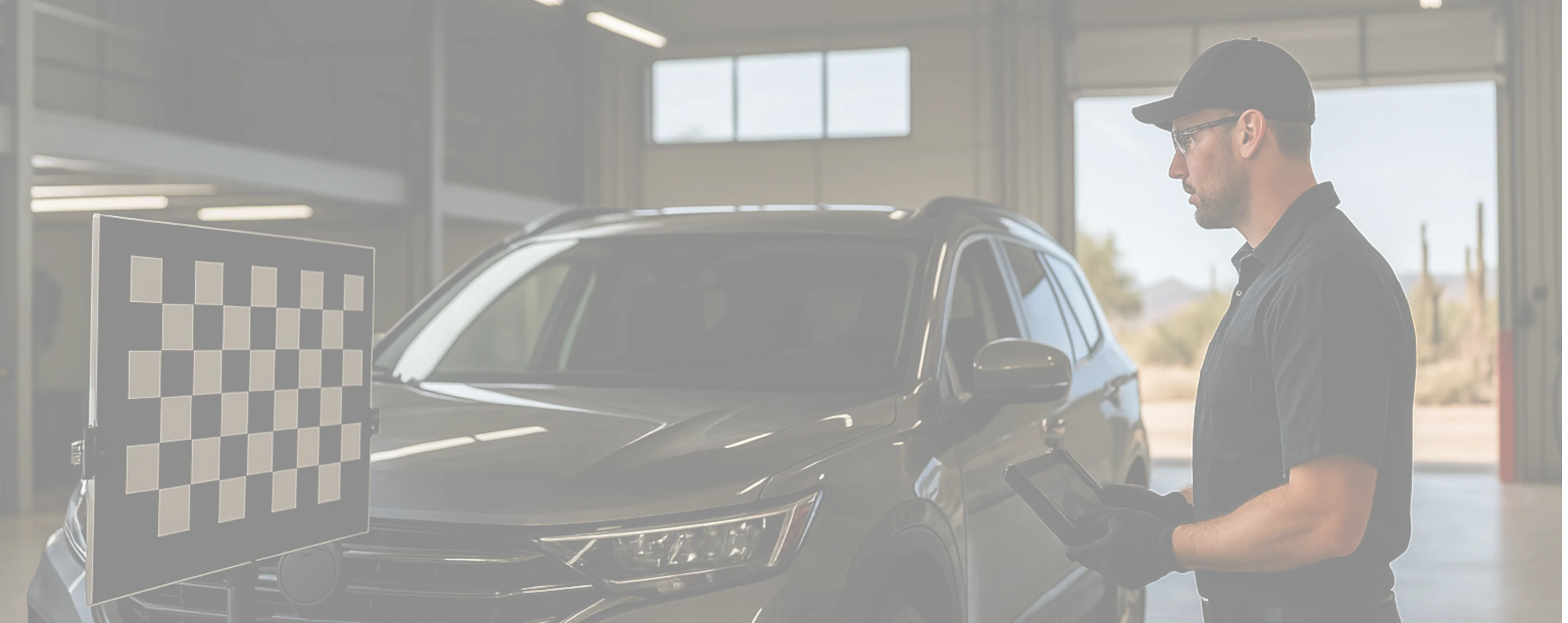
Automakers specify different procedures. In a static calibration, the vehicle is positioned on a level surface in a controlled environment. Technicians place high-contrast targets, mirrors, or alignment boards at exact distances and heights, then use a scan tool to guide the camera through a series of measurements. This method requires space, precise lighting, and the ability to control reflections—hard to achieve in an uncontrolled parking lot. A dynamic calibration uses a scan tool and a structured road test. The technician drives at specified speeds on well-marked roads while the camera “learns” using real lane lines and roadside features. Many models require both: a static procedure to set a baseline and a dynamic drive to validate performance on real pavement. Good shops will follow the service information for your exact VIN rather than relying on one-size-fits-all routines.
When Calibration Is Required
Replacement of the windshield is the most common trigger, but it’s not the only one. Any time a forward-facing camera is removed and reinstalled, calibration should be checked. So should situations where the camera bracket or gel pack is disturbed, where collision repair or suspension work could have changed ride height and geometry, or where driver-assist faults or warning lamps have appeared. Even something as simple as upgrading wheels and tires can shift the stance enough that an OEM procedure calls for revalidation. A reputable shop will review your vehicle’s build data, look up current OEM instructions, and document why calibration is or isn’t needed for the work done.
Standards and Safety Guidance
Calibration isn’t a marketing add-on; it’s embedded in safety guidance across the industry. The Auto Glass Safety Council provides clear consumer-facing explanations of why calibration matters and what the process involves. If you want a neutral overview to share with a decision maker in your household, the AGSC explainer on the importance of calibration is a concise, authoritative resource. The key point is simple: after any repair that affects ADAS sensors, the vehicle must be restored to a known-good state, and that requires documented procedures—not best guesses.
What a Proper Calibration Appointment Looks Like
Expect a conversation up front. The advisor should confirm your vehicle’s ADAS features, scan for stored faults, and explain whether your model requires static, dynamic, or dual calibration. If static work is required, the vehicle will need a stable, level floor with ample space in front, consistent lighting, and the ability to position alignment targets without wind or shadow interference. Dynamic drives call for clean, well-marked roads, which can be challenging during Phoenix construction seasons—good shops plan routes and schedules to meet the OEM’s criteria. After alignment, the technician will road-test the vehicle to confirm there are no spurious warnings and that features such as lane-departure warning, lane centering, and forward collision alert behave normally. You should leave with printed or digital documentation showing pre- and post-scans, the calibration steps performed, and a note of any outstanding issues that may require dealer-level action.
Adhesive Cure Times, Heat, and the Phoenix Factor
The best calibration in the world won’t help if the glass shifts before the urethane has stabilized. Phoenix heat accelerates curing, but it can also create expansion and contraction that tug on brackets and stress adhesive interfaces if the vehicle is moved too soon. Professional shops adhere to adhesive manufacturer specifications, factoring temperature and humidity into safe drive-away times. They’ll also warn against slamming doors or hitting speed bumps immediately after install, because pressure waves inside the cabin can nudge a fresh bond. In other words, a shop that understands our climate plans the whole job—adhesive, glass placement, and calibration—as one continuous process.
Common Misconceptions (And Why They’re Risky)
“My old windshield was fine without calibration; this one will be too.” That logic ignores how tightly modern systems are integrated and how a small optical difference can move a camera’s viewpoint. “There’s no dash light, so everything must be aligned.” Not necessarily—many misalignments don’t throw a fault until an edge case occurs, like a faded merge area at dusk. “The camera is physically centered; that’s enough.” Centering is not aiming; a one-degree pitch error can push lane projections feet off target at distance. The risk isn’t just nuisance beeps—it can be increased stopping distances or steering nudges in the wrong moment. Calibration is the proof that your driver-assist is seeing the same road you are.
How Windshield Features Interact with ADAS
Many windshields include acoustic interlayers, solar-absorbing layers, heated wiper parks, rain sensors, and camera “viewing windows.” Subtle differences across brands can affect how light is transmitted or how the camera’s field of view is occluded by frits and hardware. For vehicles with head-up displays, wrong glass can create ghosting or double images that distract the driver. None of this means you must always buy the most expensive option; it means your installer should source glass that meets your vehicle’s specification and then calibrate the system so software and hardware agree on what’s ahead.
What You Should Ask Before You Book
A quick set of questions separates careful operations from cut corners. Ask whether your specific vehicle requires calibration and which type. Ask where the calibration is performed and how the shop controls lighting, level, and target placement. Ask whether they perform pre- and post-scans and provide a report. Ask how they handle dynamic drives when lane markings are poor, and what their plan is if the calibration will not complete on the first attempt. Finally, ask about warranty on both the glass install and the calibration, including what happens if a warning reappears a week later. Clear answers are part of the service, not extras.
After the Job: What You Should Experience on the Road
Post-calibration driving should feel unremarkable—in a good way. Lane-keeping prompts should appear at familiar distances, forward collision warnings should neither trigger constantly nor remain silent when a truly short gap appears, and any head-up display should remain crisp without double images. If anything feels “off,” call the shop and share times, locations, and conditions; that information helps a technician reproduce the issue and confirm whether a second validation drive or a software update is needed. Good providers want that feedback because it helps refine their process and ensures your vehicle’s safety systems are trustworthy across Phoenix’s mix of glare, dust, and freeway heat shimmer.
Talk With a Phoenix-Savvy Team
If you want help planning a windshield replacement and ADAS calibration that accounts for our sun, dust, and traffic, reach out to ClearView Glass & Tint. We follow OEM-aligned procedures, perform pre- and post-scans, and handle static and dynamic calibrations with the controlled setups they require—then validate on a real Phoenix route. You’ll leave with documentation you can trust and visibility you can feel on day one.
Frequently Asked Questions Related to ADAS Calibration
Why does my vehicle need ADAS calibration after a windshield replacement?
Modern windshields house cameras and sensors that support lane-keeping, forward collision warning, and other driver-assist functions. Even small differences in glass thickness, curvature, or camera bracket alignment can shift how these systems “see” the road. Calibration ensures those sensors are aimed correctly and that your ADAS features perform safely and reliably.
What’s the difference between static and dynamic ADAS calibration?
Static calibration takes place indoors on a level surface using precisely positioned targets, controlled lighting, and OEM-specified measurements. Dynamic calibration requires a structured road test where the vehicle learns lane lines and roadside features in real time. Many vehicles need both procedures to fully restore accuracy.
Can intense Phoenix sun or heat impact the calibration process?
Yes. High temperatures accelerate adhesive curing but can also cause expansion or contraction that shifts the camera slightly if the vehicle moves too soon after installation. Reputable shops like ClearView Glass & Tint factor Phoenix heat.
What happens if I skip ADAS calibration after a windshield replacement?
Skipping calibration can lead to misaligned lane guidance, false collision alerts, steering nudges at the wrong time, or failure to recognize lane lines in high-glare Phoenix conditions. Many misalignments don’t trigger a dashboard warning, so the system may appear normal even though it’s off by several degrees.
How long does a proper calibration appointment usually take?
Timing depends on your vehicle and what type of calibration is required. Static calibrations require controlled indoor setup, while dynamic drives depend on clean, well-marked roads. Most appointments involve a pre-scan, calibration procedure(s), road test, and a post-scan—typically a few hours when done correctly.
Why does glass quality or brand matter for ADAS performance?
Windshields can include acoustic layers, solar-absorbing coatings, rain sensors, head-up display sections, or specific camera viewing windows. Differences in optical quality or frit design can affect how sensors detect lane lines or read the horizon. Using the correct spec glass ensures the ADAS camera sees what the software expects.
What should driving feel like after a successful calibration?
Your lane-keeping, collision warnings, and centering features should behave normally without exaggerated alerts or missed cues. The vehicle should feel stable and predictable, even in Phoenix glare or freeway heat shimmer. If anything feels off, contact the shop so they can review the calibration data or perform an additional validation drive.
By Thomas McDonald
Latest Articles, Industry News & Expert Insights
Stay informed with updates, expert perspectives, and practical guidance on glass repair, replacement, and window tinting across automotive, residential, and commercial applications.